the-beaumont

The Beaumont London

An Honest Review of Mayfair's Most Distinctive Boutique Hotel

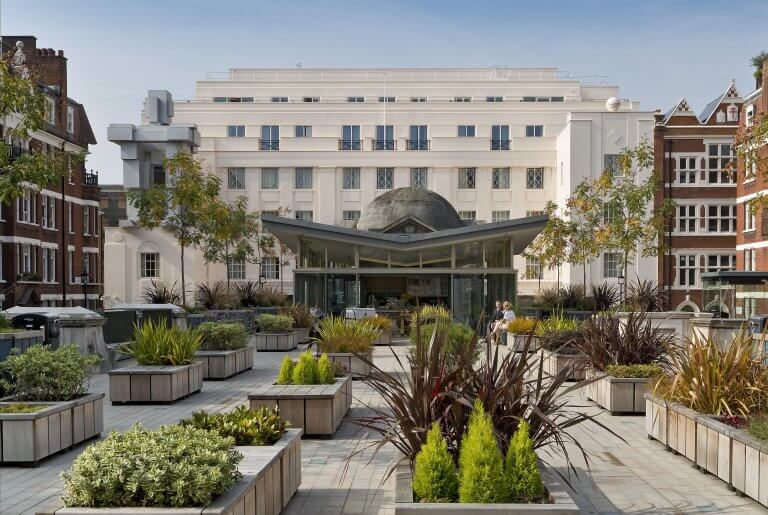
Tucked behind a striking Art Deco façade on Brown Hart Gardens in the heart of Mayfair — a place that manages to feel genuinely boutique despite its five-star ambitions.

1926 building  ·  73 rooms  ·  Independent editorial review

Read the review

A hotel with a personality — in a city where luxury often means gloss

In a city where luxury hotels tend toward either grand-institution formality or the kind of slick anonymity that makes every corridor feel interchangeable, The Beaumont does something harder: it has a personality. The Art Deco bones of the 1926 building haven't just been preserved — they've been made the point.

Every detail, from the chevron-inlaid floors to the deep leather armchairs in Le Magritte Bar, signals that someone thought carefully about what kind of place this should be.

It suits a fairly specific type of traveller — design-conscious, experience-led, and uninterested in the kind of corporate gloss that makes five-star hotels feel like expensive airports.

The building at Brown Hart Gardens was never meant to be a hotel. Built in 1926, it was originally constructed as a garage for the Selfridge Gordon Hotels. The hotel opened in 2014 — the vision of hotelier Jimmy Lahoud alongside restaurateurs Chris Corbin and Jeremy King, the partnership behind The Wolseley and The Delaunay.

Brown Hart Gardens itself is worth mentioning separately. It's an elevated garden square — quite literally raised above street level on a podium — that gives the hotel's immediate surroundings a genuine sense of calm.

This is an independent editorial guide from London Boutique Hotels. Recommendations are selected on merit, never paid.

Pros & Cons of The Beaumont London

A short summary of where The Beaumont excels and where it falls short — useful if you're comparing it against other Mayfair options.

A group of people standing in front of a Mayfair building
Photo by Samuel Regan-Asante on Unsplash

Pros

  • Genuine Art Deco character throughout the architecture, interiors, and atmosphere — a structural identity, not a decorative theme.
  • Boutique scale (73 rooms) enables personalised, recognition-based service that larger hotels can't replicate.
  • ROOM by Sir Antony Gormley — one of the most singular sleep experiences available anywhere in London.
  • A dining ecosystem — Rosi, Le Magritte Bar, The Gatsby Room, Pearl — that competes with standalone Mayfair restaurants.
  • Brown Hart Gardens address: a quiet, elevated garden square offering genuine calm in the middle of Mayfair.
  • Bond Street tube approximately three minutes' walk away, with direct Elizabeth line access to Heathrow.

Cons

  • Wellness facilities are limited compared to larger London luxury hotels — no pool, no thermal suite.
  • Entry-level Classic Rooms are compact; guests sensitive to room size should consider Superior or Premier tiers.
  • Premium pricing throughout — room rates, dining, and spa treatments all reflect the Mayfair postcode.
  • Not suited to large conferences or events requiring significant capacity; the Munnings Room is intimate by design.

A Complete Guide to Accommodation

With 73 rooms and suites, The Beaumont isn't small by boutique standards — but it's intimate enough that the accommodation offer feels genuinely tiered rather than just nominally so.

Interior detail from The Beaumont London

ROOM by Sir Antony Gormley

The hotel's most extraordinary offering

Designed by one of Britain's most significant living artists, ROOM is a sculptural artwork that also functions as a hotel suite. From the exterior, you can see it: a crouching human figure, cast in dark metal, attached to the façade. Inside, the geometry is defined by the sculpture — a series of intimate, human-scaled volumes rather than the conventional hotel layout.

Booking ROOM requires planning — a single suite, in high demand, sells out well in advance.

Classic Room

Entry-level, compact by the standards of the suites above. Art Deco furnishings, high-quality linens, well-appointed bathrooms — none of the cost-cutting that tends to appear at the lower end of five-star categories.

From ~£500–£600/night  ·  Best for short stays, value-conscious luxury travellers

Superior & Superior Grand

The sweet spot for most guests. A step up in space and outlook without the significant price jump of the suites — the rooms where the Art Deco details feel most balanced against the space available.

From ~£650–£900/night  ·  Best for couples, longer stays

Premier Room

Elevated comfort with noticeably more generous proportions. A sensible middle ground for guests wanting a meaningful upgrade without committing to suite pricing — particularly for longer stays.

From ~£850–£1,100/night  ·  Best for 3+ night stays

Modern living room with wooden walls and elegant furniture
Photo by lost voyager on Unsplash

Junior Suites

Where the accommodation offer starts to feel genuinely special. Proper living space alongside the bedroom. Outdoor space in central London is rare, and in Mayfair the Premier Junior Suite with Terrace is close to exceptional.

From ~£1,100–£1,800/night  ·  Best for celebrating guests

Photo by lost voyager on Unsplash

Art Deco staircase with a window
Photo by henry perks on Unsplash

Signature Suites — Mayfair & Roosevelt

The full expression of the Art Deco aesthetic. The Roosevelt Suite — named after and inspired by the American president — is a deliberate statement of the hotel's transatlantic personality.

From ~£1,800–£2,500/night  ·  Best for extended stays, maximum luxury

Photo by henry perks on Unsplash

Across all categories, expect Art Deco furnishings that feel genuinely considered, quality linens, well-designed bathrooms, and in-room technology integrated without being the focus.

Art Deco bones, made the point

The interiors, the garden square, and the dining rooms — the visual identity of the hotel in five frames.

A dark wood bar with stools — evoking Le Magritte Bar
Le Magritte Bar — named after the Belgian surrealist, one of the better hotel bars in London.

Photo by Panos Katsigiannis on Unsplash

The Beaumont Art Deco façade at Brown Hart Gardens
The Art Deco façade on Brown Hart Gardens — a 1926 building, made the point.
A warmly lit interior room with a table, chairs and a lamp — evoking The Gatsby Room
The Gatsby Room — Great Gatsby-era aesthetic without tipping into pastiche.

Photo by Ambitious Studio* | Rick Barrett on Unsplash

An elegant dining table setting with wine glasses — evoking Rosi
Rosi — the flagship restaurant, European brasserie in confidence and season.

Photo by Kamilla Isalieva on Unsplash

Interior detail evoking ROOM by Sir Antony Gormley
ROOM by Sir Antony Gormley — a crouching figure cast in dark metal, attached to the façade.
Focused photo of wine glasses lined on a table — evoking Rosi and Le Magritte Bar
Photo by Nils Stahl on Unsplash

A dining ecosystem worth a trip in its own right

The Corbin & King influence is felt most clearly here. This is not a hotel where the restaurants are an afterthought. Rosi takes a European brasserie approach — confident, seasonal, and uninterested in culinary theatre for its own sake.

Le Magritte Bar is genuinely one of the better hotel bars in London — dark wood panelling, leather seating, a cocktail programme that's serious without being pretentious. Afternoon tea in The Gatsby Room has the theatrical Great Gatsby aesthetic without tipping into pastiche. Pearl is the quieter, more intimate counterpoint.

Rosi  ·  Le Magritte Bar  ·  The Gatsby Room  ·  Pearl — all open to non-residents.

A complementary amenity, honestly assessed

The Beaumont's wellness offering is best understood as a complementary amenity rather than a primary draw. Guests seeking multiple treatment rooms, a pool, and a thermal suite will find more comprehensive facilities at larger London properties.

What the hotel does offer is a treatment menu covering the essentials — massages, facials, body treatments — delivered by qualified therapists, and gym access as part of the amenity package. Where the wellness experience actually excels is less tangible: the overall atmosphere of calm, the quality of sleep the rooms facilitate, and the restorative effect of simply being in a well-designed space.

The concierge can arrange access to nearby Mayfair spa facilities on request.

A stylish room with comfortable seating — evoking the calm atmosphere of the hotel
Photo by Braden Jarvis on Unsplash
A quiet European street in Mayfair, London
Photo by Euronewsweek Media on Unsplash

Brown Hart Gardens — the ideal Mayfair base

Bond Street tube is approximately three minutes' walk. The Elizabeth line connects directly to Heathrow in around thirty minutes, making The Beaumont one of the most logistically convenient luxury hotels in the city for transatlantic and European travellers.

Within walking distance: Bond Street shopping, Selfridges, Grosvenor Square, Hyde Park, the Royal Academy of Arts on Piccadilly, and Cork Street's commercial galleries. October is worth flagging specifically — Frieze Art Fair brings the art world to London, and the Mayfair neighbourhood is at its most alive.

Royal Academy  ·  Cork Street  ·  Frieze Art Fair  ·  Selfridges  ·  Hyde Park

An untamed spirit of adventure — in practice

The Beaumont's brand positioning centres on what it describes as an 'untamed spirit of adventure' — a phrase that could read as marketing language but is, in practice, reflected in the hotel's actual decisions. Commissioning ROOM by Sir Antony Gormley is not what a cautious, committee-designed hotel does. Naming the bar after René Magritte is a choice. Building the Roosevelt Suite as a homage to the transatlantic grand hotel tradition is a statement of intent.

The service approach is personalised without being intrusive. Attentive and present when you want it, absent when you don't. Across aggregated reviews on TripAdvisor and Google, The Beaumont consistently scores in the 4.5–5 star range, with particular praise for personalisation of service, the atmosphere of Le Magritte Bar, and the singularity of ROOM by Sir Antony Gormley.

How it compares to other Mayfair five-star hotels

Claridge's

Larger (around 200 rooms), more famous, and carrying the full weight of its century-plus history. Genuinely magnificent — but also more formal, more institutional, and considerably harder to feel at home in.

The Connaught

Superb and arguably London's finest hotel for pure service quality, but formal in a way that The Beaumont deliberately isn't. Suits guests who want the full ceremonial luxury experience.

Brown's Hotel

The closest comparison in scale and character — also boutique, also historically rooted, also serious about food and drink. The difference is aesthetic: Brown's leans into English country house warmth; The Beaumont is sharper, more metropolitan.

Is The Beaumont worth the price?

The honest answer is: yes, for the right guest. If you're choosing The Beaumont because it's the most prestigious-sounding option and you don't particularly care about design or atmosphere, there are probably better-value luxury hotels in London. But if the Art Deco identity, the boutique scale, the dining ecosystem, and the Brown Hart Gardens location are specifically what you're looking for — and they should be — then the pricing reflects what you're getting.

Booking direct is generally the better option — the hotel offers a best rate guarantee and more flexibility for modifications than third-party OTAs. Standard check-in is from 3pm; check-out by 12 noon.

The questions readers ask most

The practical answers that most reviews leave out.

Brown wooden dining table in a warmly lit room
Photo by Carson Masterson on Unsplash
Is The Beaumont London worth it? +

For the right guest, yes — unreservedly. The Art Deco character, boutique scale, Le Magritte Bar, and the singular ROOM by Sir Antony Gormley make The Beaumont one of the most distinctive five-star hotels in London. If design, atmosphere, and personalised service matter to you, the pricing reflects genuine value. If you're primarily concerned with room size or spa facilities, there are better-suited alternatives at the same price point.

Who owns The Beaumont hotel London? +

The Beaumont was founded by hotelier Jimmy Lahoud in partnership with restaurateurs Chris Corbin and Jeremy King, the team behind The Wolseley, The Delaunay, and other celebrated London dining institutions. The hotel opened in 2014 and remains an independently owned boutique property.

How many rooms does The Beaumont have? +

The Beaumont has 73 rooms and suites in total, ranging from Classic Rooms through to the extraordinary ROOM by Sir Antony Gormley. This boutique scale is central to the hotel's identity — it's what makes genuinely personalised service possible.

What is ROOM by Antony Gormley? +

ROOM is a unique hotel suite designed by Sir Antony Gormley, one of Britain's foremost contemporary artists. From the exterior, it appears as a crouching human figure in dark metal attached to the hotel's façade. Inside, the space is carved into and around the sculptural form, creating an intimate, unconventional sleeping environment unlike any other hotel room in London. It books out well in advance.

Is The Beaumont pet-friendly? +

Yes, The Beaumont is pet-friendly. Guests travelling with dogs are welcome. It's advisable to contact the reservations team directly at the time of booking to confirm specific arrangements and suitable room types.

How far is The Beaumont from Bond Street tube? +

The Beaumont is approximately three minutes' walk from Bond Street underground station, which serves the Central and Jubilee lines. Bond Street is also on the Elizabeth line, providing a direct connection to Heathrow Airport in approximately thirty minutes — making the hotel exceptionally well-placed for international arrivals.

What restaurants are at The Beaumont London? +

The Beaumont has a full dining ecosystem: Rosi (the main restaurant, European brasserie style), Le Magritte Bar (cocktails, bar food, and one of Mayfair's finest hotel bar atmospheres), The Gatsby Room (afternoon tea and private dining), and Pearl (an intimate lounge bar). All dining venues are open to non-residents as well as hotel guests.